.svg)
.svg)
Web intake run
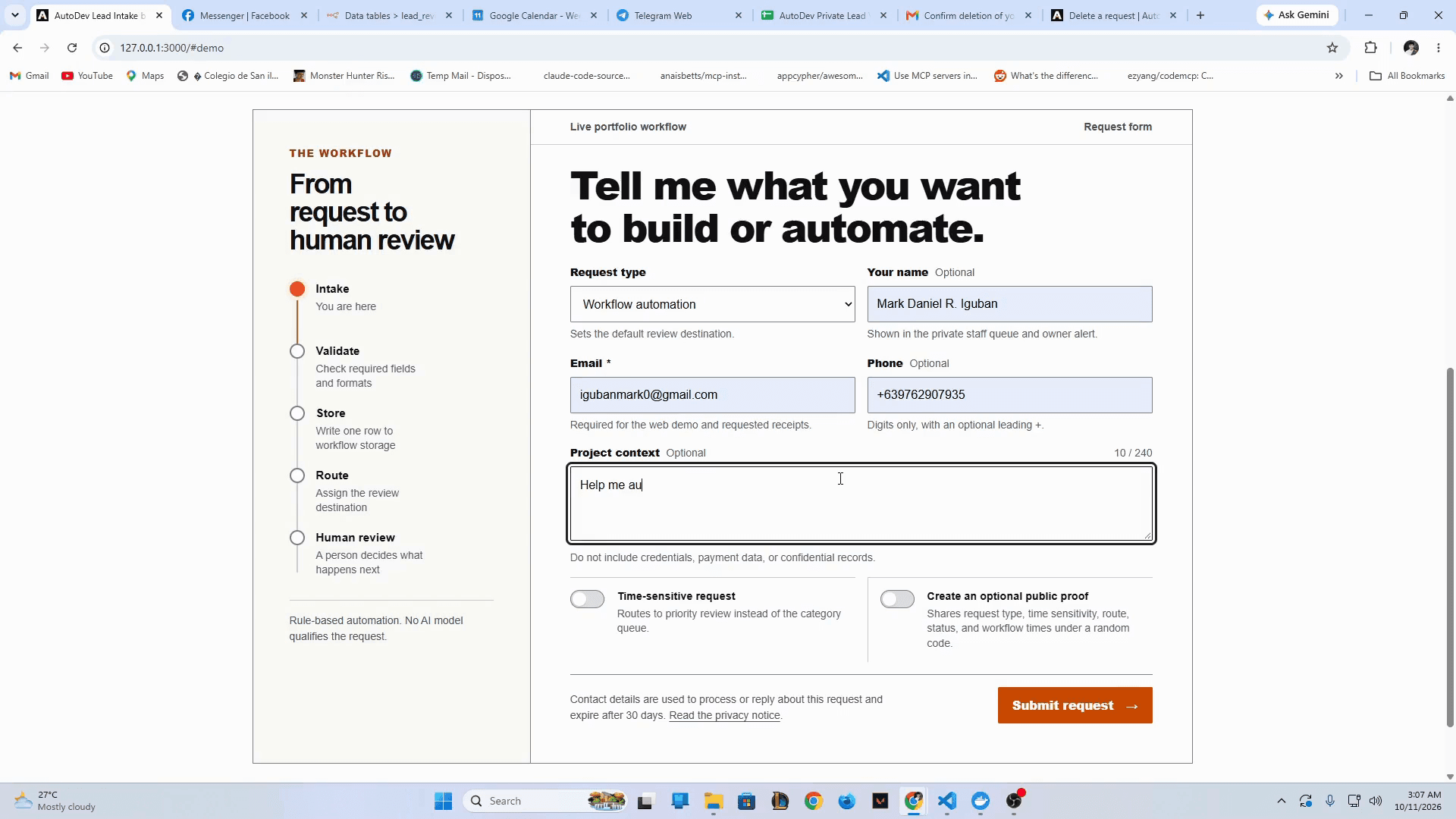
Controlled local test · web channel
n8n workflow automation
A rule-based intake system that accepts service requests, stores a verifiable receipt, and routes a human-review queue into private follow-up workflows.
Case navigation
Evidence gallery
01 / Controlled local capture
Shared rule-based intake validates, deduplicates, stores, and routes test requests.
Recorded local tests
Follow a web request and an app-role Messenger request through intake and private follow-up.
Controlled local test · web channel
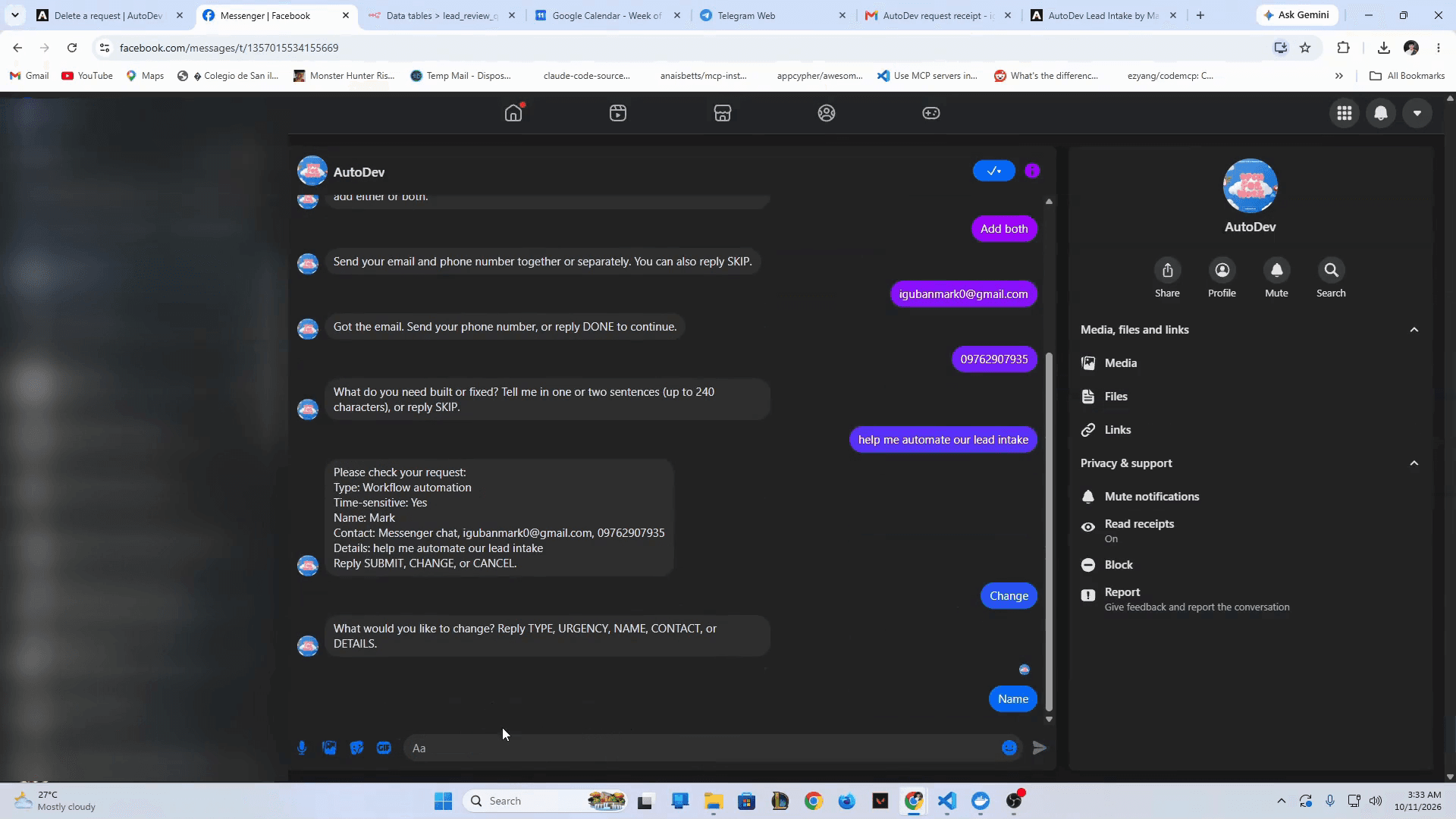
Controlled local test · app-role account
02 / Challenge
AutoDev explores how a small service business could collect web and Messenger requests, show what happened to each submission, and keep follow-up visible to its owner. The boundary is deliberate: routing rules organize work, while a person reviews and decides what to do next.
03 / Approach
I built the web entry and shared n8n intake workflow, then connected an owner-only queue to Google Sheets, Telegram, Brevo fallback, and a next-day Calendar reminder. Validation, duplicate prevention, stored readback, redacted proof, deletion, and retention behavior were exercised with fictional requests.
04 / Result
The workflow canvases show how the system is built. The queue, Sheet, Telegram, Calendar, and ledger captures show observed states from controlled local tests; the system map is an illustration, not run evidence. The two full-length recordings show the web and app-role Messenger entry paths and private follow-up. There is no public hosted demo yet, and hosted acceptance remains the next gate.
What I would improve next